

A restaurant can go from a quiet shift to a full house in minutes. For quick-service restaurants (QSRs), lunch rushes, weekend crowds, promotional campaigns, and delivery orders can quickly stretch kitchen and front-of-house teams. Add employee turnover and hard-to-fill positions, and maintaining consistent service becomes a constant challenge.
So, what manpower solutions are available for restaurants and QSRs? Beyond hiring workers individually, you can partner with a restaurant manpower services provider to hire, employ, and deploy personnel based on your needs.
This way, you can maintain enough staff, manage employment-related tasks, and keep up with changing customer demand.
What Manpower Solutions Are Available for Restaurants and QSRs?
Restaurants need enough staff to keep things running smoothly, especially when customers start piling up. A manpower services provider can help with everyday restaurant crew staffing needs and prepare your team for busier days. Depending on the provider’s services, this may include:
- Flexible staffing – Hire and deploy workers to support daily operations, meet temporary needs, or open new branches.
- Kitchen and service staff – Find workers for roles such as kitchen crew, food preparation, cleaning, cashiering, and order taking.
- Extra help during busy days – Bring in additional staff for lunch and dinner rushes, weekends, holidays, promotions, or store openings, depending on worker availability.
- Help with hard-to-fill roles – Get support in finding workers for positions that are often difficult to fill, giving your HR team more time for other tasks.
Common Manpower Challenges in the Restaurant and QSR Industry
Restaurants depend on coordinated teams to keep orders moving and customers satisfied. When staffing levels fall short, even routine tasks can become difficult to manage. Several challenges make restaurant workforce management particularly demanding.
1. High employee turnover
Restaurant work can be demanding, and frequent staff changes make it harder to keep shifts fully staffed. When employees leave, managers must spend more time hiring and training replacements, which can add costs and affect service quality.
2. Changing customer demand
Some days and shifts are busier than others. Lunch and dinner rushes, weekends, holidays, and promotions can bring in more customers than usual. Without enough staff, orders may take longer and employees may feel overwhelmed. On the other hand, too many workers during quiet periods can increase labor costs.
3. Time-consuming hiring and deployment
Finding, hiring, training, and scheduling workers takes time, especially when several positions need to be filled at once. Managers must also handle absences and replace employees who leave while keeping daily operations running.
Working with a manpower solutions provider may help ease some of the hiring and deployment workload, depending on the services offered and the terms of the agreement
4. Keeping service consistent
Customers expect good service whether they visit during a quiet afternoon or a busy weekend. In fact, a 2025 survey of 1,000 diners found that 40% would not return to a restaurant after experiencing discourteous service. Frequent staff changes can make this harder to avoid, as new employees need time and training to deliver the same level of service.
Key Kitchen and Front-of-House Roles Restaurants Need
Effective manpower planning for restaurants starts with knowing which roles you need to keep daily operations running smoothly.
| Operational area | Common roles | Primary responsibilities |
| Kitchen | Cooks, food preparation personnel | Prepare ingredients, cook menu items, and support timely order fulfillment |
| Kitchen support | Dishwashers, kitchen cleaners | Maintain clean work areas, utensils, and equipment |
| Front of house | Cashiers, servers, restaurant crew | Process orders, serve customers, and coordinate order handoffs |
| General support | Cleaners, stockroom, and inventory personnel | Maintain premises, organize supplies, and support inventory handling |
The required headcount varies by restaurant format, menu complexity, customer volume, and operating hours. A full-service restaurant may need more servers, while a QSR may prioritize cashiers, food preparation personnel, and crew members who can handle multiple tasks.
Managers should also consider shift coverage, break schedules, expected order volume, and the time needed to train new personnel. This helps you plan staffing around actual operational needs rather than relying on a fixed headcount alone.
How Do Restaurants Meet Kitchen and Front-of-House Manpower Requirements?
Keeping your restaurant properly staffed starts with understanding your workforce needs and finding the right manpower partner to help fill them. Here are three steps to get started:
1. Identify staffing requirements by role and shift
Determine how many personnel each location needs, which positions require coverage, and when additional support is necessary. A restaurant may need more kitchen personnel during dinner service or additional cashiers during weekend promotions.
2. Work with a provider that can hire and deploy personnel
A manpower services provider can source, screen, hire, and deploy its own personnel based on the restaurant’s agreed requirements. The provider coordinates deployment according to the needs of the relevant site, shift, and operational function.
This arrangement differs from working with food service employment agencies that focus primarily on sourcing or placing candidates. Under a manpower services agreement, the provider takes on defined employment and service responsibilities for its own personnel.
3. Clarify payroll and compliance responsibilities
Depending on the agreement, the provider manages payroll and applicable employer-related administration for its deployed personnel, including statutory contributions and other employment obligations. This can reduce the restaurant’s internal administrative workload.
However, businesses should review the actual contracting arrangement, not just the provider’s service description. Covered contracting arrangements must comply with applicable labor laws and Department of Labor and Employment (DOLE) requirements, including Department Order No. 174, Series of 2017, where applicable. A legitimate arrangement must also avoid prohibited labor-only contracting.
How Can QSRs Manage Manpower During Peak and High-Turnover Periods?
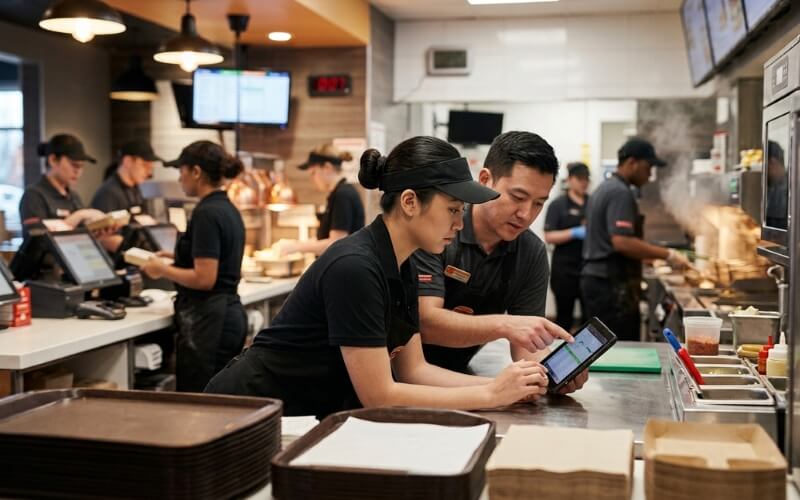
For QSRs, busy periods can put extra pressure on the team. Planning, predicting customer demand, and having access to extra staff can help keep orders accurate, food quality consistent, and customers happy. Planning ahead, predicting customer demand, and having access to extra staff can help keep orders accurate, food quality consistent, and customers happy.
- Plan for predictable demand – Review sales patterns, promotional calendars, holidays, and historical order volumes to identify periods that may require more workers. This gives managers time to coordinate staffing requirements before demand increases.
- Arrange additional deployed personnel for peak periods – A manpower solutions provider can coordinate additional personnel for agreed requirements during busy seasons, special promotions, and other periods of increased demand, subject to availability and the terms of the agreement.
- Support ongoing operations during turnover – When vacancies affect kitchen or front-of-house coverage, structured manpower services can help restaurants maintain their agreed staffing levels while coordinating personnel requirements with the provider.
- Standardized onboarding and work procedures – Clear instructions, role-specific training, and consistent operating procedures help newly deployed personnel adapt to the restaurant’s workflow. Managers should communicate food safety requirements, service standards, and escalation procedures from the start.
How Wealthlink Supports Restaurant and QSR Operations
Managing restaurant operations requires a reliable workforce that can adapt to changing customer demand, maintaining service standards, and supporting day-to-day operations. Partnering with an experienced manpower solutions provider can help restaurants and QSRs address staffing requirements while reducing administrative workloads.
With over 25 years of experience and nationwide coverage, Wealthlink Incorporated provides comprehensive manpower services, including personnel sourcing, screening, hiring, training, and deployment. Its services also include DOLE compliance support and workforce monitoring through the BundyPro Time and Attendance Management System (BTAMS).
Whether you’re managing a single restaurant, expanding multiple branches, or preparing peak service periods, Wealthlink helps businesses address their kitchen, front-of-house, and operational staffing needs.
Keep your restaurant operations running efficiently with reliable manpower support. Contact Wealthlink Incorporated to explore manpower solutions tailored to your restaurant or QSR’s workforce requirements.